Two rivers
In 2002 Amir ElSaffar♪ used prize money from a trumpet competition to travel to Baghdad, where he studied the Iraqi maqam, the classical vocal tradition, and learned the santur, a hammered dulcimer. He left in early 2003 as war approached and kept studying in Europe. Back in America he developed a way of playing the microtones of Arabic music on the trumpet, founded an ensemble devoted to traditional Iraqi maqam, and in 2007 released his debut album. He called it Two Rivers.
A Chicago-born son of an Iraqi immigrant had named his jazz album for Mesopotamia itself, the land between the Tigris and the Euphrates, and filled it with the sound of both.
The beat scientist
Around the same time, a drummer named Makaya McCraven♪ was making his name in Chicago's jazz scene, where he would live for about twenty years. He had been born in Paris in 1983 to Stephen McCraven, an African American jazz drummer who played with Archie Shepp and Yusef Lateef, and Agnes Zsigmondi, a singer and flutist from the Hungarian folk band Kolinda, who had left Hungary in 1979. He grew up in western Massachusetts in a community that included Gnawa musicians, the North African tradition created by descendants of enslaved West Africans. From his mother he learned that music in odd meters could feel natural and danceable.
McCraven is, by birth, the meeting this book describes: Hungarian folk song and Black American jazz in one person. He would become one of the most influential musicians of his generation by recording live improvised sessions and cutting them into new compositions afterward.
Tensei
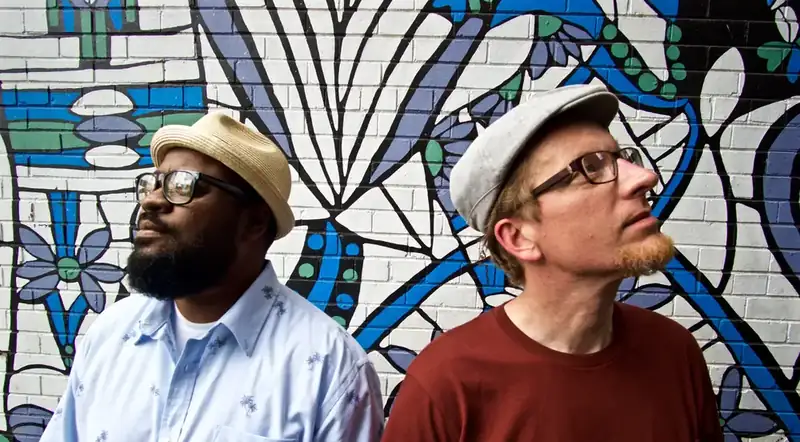
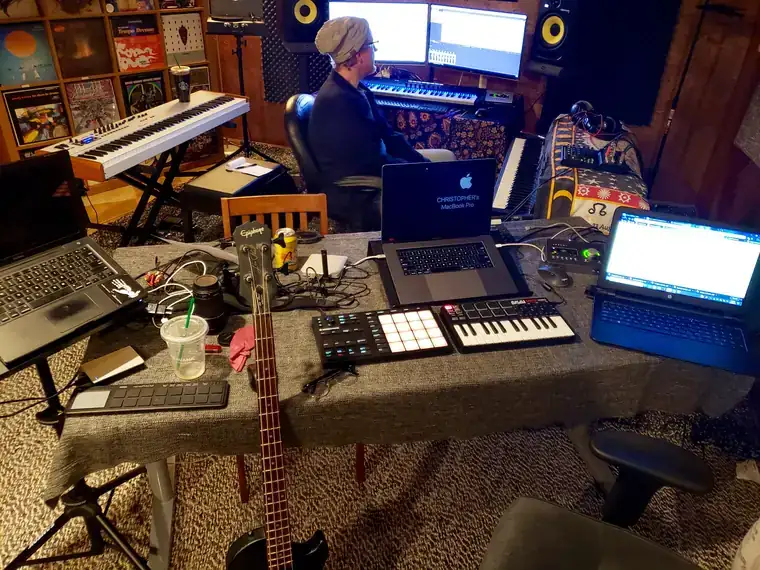
Midas Wells♪ and I became Tensei♪ around 2010. I had married, become a father at nineteen, learned Japanese, and gone to work for Japanese companies. The music happened at night, in a closet studio with no ventilation. Our method was simple. We did not dig through old records for samples. We played and composed the parts ourselves, brought in Chicago jazz and soul musicians, asked them for two passes, and then sampled and rebuilt what they gave us. We sampled ourselves.
I met Makaya McCraven at Andy's Jazz Club around 2009 or 2010. We bonded over being fathers, and we influenced each other. Through Kafele Bandele♪ I met the pianist Greg Spero♪, through Greg I met Makaya, through Makaya I met the singer Yaw♪, and through Yaw I met Khari Lemuel♪, the first real jazz master who worked with our music, a cellist and singer who introduced me to a spiritual practice that has shaped my life. I met the harpist Brandee Younger♪ online and introduced her to Makaya.
We won a remix contest, and I slipped a demo to Andrew Lojero, the A&R at Plug Research in Los Angeles, a label whose roster included Flying Lotus♪ and Bilal♪. Tensei from Chicago was signed. In 2011 the Los Angeles Times premiered our remix of Bilal's "Robots," and Hypebeast and Fake Shore Drive followed. As far as I know, we were the first act of Chicago's 2010s wave of jazz-inflected beat music to land in major press, three years before International Anthem launched. Before Tensei, I had released Synchromystic in 2010 on First Word Records under the name Herma Puma♪. In 2012 we released two vinyl EPs.
A lot of my part in that scene left no trace. I had a press list, built from our releases, and in 2011 a press list was the scarce resource. I sent out music for artists who had no other way into those inboxes. I was, without planning it, playing the role that Maxwell Street merchants and small-label owners had played for a century: the person connecting music to the people who could carry it. Unlike many of them, I owned nothing of what I helped move.
Constellate
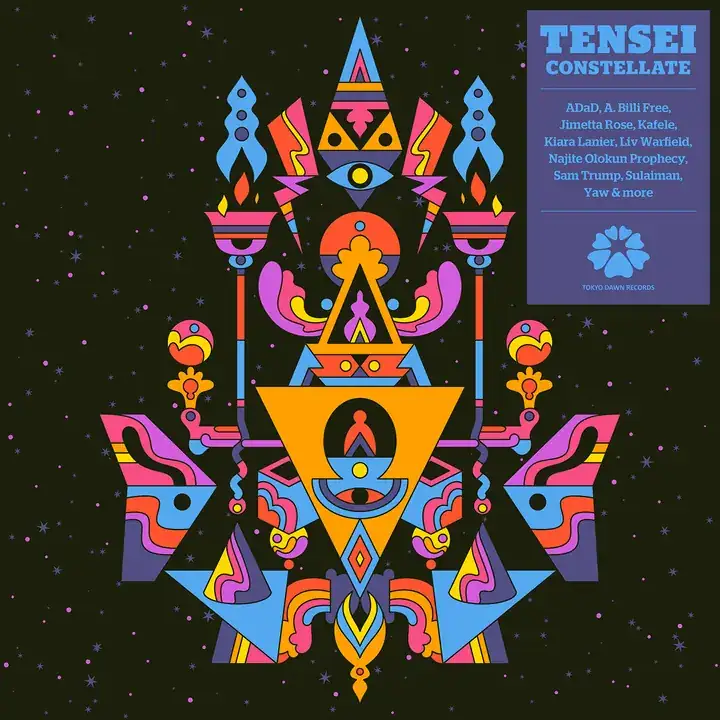
After I stepped back for a few years to hold my family and my career together, we came back on Tokyo Dawn Records in Germany. In 2019 the label released Constellate on vinyl. It described the record as a soulful, electronic, hip-hop-inflected view of Chicago's growing spiritual jazz movement, and the friends who joined the sessions included Makaya McCraven, Brandee Younger, Greg Spero, Junius Paul♪, Khari Lemuel, Kevin Mitchell, and Paul Curtis. Georgia Anne Muldrow♪ sang on "Walk It Out." Angel Bat Dawid♪ played on "Magical Journey." That same year we released I Luma with the singer A. Billi Free♪.
The Chicago Reader called our sound an electronic canvas of astral soul. Okayplayer named Constellate a Project of the Year. UK Vibe placed us in a Chicago lineage running back through Curtis Mayfield♪, Louis Armstrong♪, and Earth, Wind & Fire♪. Almost everyone in those credits went on to a major career. Tensei was not a group that worked with stars. It came up alongside people who became them.
Tensei across the map
From a closet studio in Chicago, Tensei's work traveled farther than we did. We never toured, but the records and the people did.
Nationally, the connections ran first through Los Angeles. Plug Research put out Tensei One and Tensei Two on vinyl in 2012, distributed through The Orchard and Sony. Through the label's A&R, Andrew Lojero, I met the Los Angeles singer Jimetta Rose♪, who had sung on Shafiq Husayn♪'s album; our music together took years to find its shape. That same year Tensei's "Space Colony," a one-take live jam, appeared on Tempo Dreams Vol. 1, a compilation curated by the Detroit producer Tall Black Guy♪ for the Bastard Jazz label. Before he was signed, I had sent his music to Aly Gillani at First Word Records in Britain.
The reach widened after that. Our 2015 Hot Box Sessions led to "Danger Us" with the Chicago rapper ADaD♪ in 2016, and to a Tensei remix of TOKiMONSTA♪'s track featuring Anderson .Paak♪ and KRANE. I produced ADaD's "Holdin' On," with Black Thought♪ of the Roots alongside Yaw and Khari Lemuel. The Los Angeles singer Georgia Anne Muldrow sang on "Walk It Out," the New York harpist Brandee Younger played on "40000 Harpedelic," and the singers Sam Trump♪ and Liv Warfield♪ joined us on "Amazing" and "What If." I Luma, our album with A. Billi Free, was recorded across three states, with her in New Mexico and us in Chicago. Bandcamp Daily made it Album of the Day on August 12, 2019, and Afropunk premiered the video for "Flourish," with Angel Bat Dawid on clarinet.
Internationally, the strongest tie was Germany. In 2013 we produced for the Chicago rapper Pugs Atomz♪'s Bama Pi on Tokyo Dawn Records, alongside DJ Vadim and Dibiase, six years before that label released Constellate. I later met the Tokyo Dawn owners in Germany and planned Tensei's return with them. Constellate came out on January 21, 2019, with design by Matt Lyon and mastering by Jan Ohlhorst, and Germany's Byte FM played both our albums.
Britain came next. In May 2012 Mary Anne Hobbs♪ played Tensei Two on XFM, national radio in the UK. On a trip to London I met Matt Moat and pitched a project called Collage, and he offered us a project for the KPM production-music library. UK Vibe gave Constellate four out of five.
Japan carried the music into its record shops. In 2013 DJ Kiyo♪'s compilation Plug Researcher put Tensei tracks into Tower Records, HMV, diskunion, and Jet Set, a retail footprint neither of us had gone looking for. Elsewhere, Belgium's De Morgen named Constellate among the week's ten best records, France's Le Gros Tas De Zik covered it and Paris's Le Mellotron played I Luma, Canada's Exclaim! reviewed I Luma, and Nigeria's Culture Custodian wrote about our work. Two producers who never played a show reached listeners in North America, Europe, Asia, and Africa.
Two connections
Looking back, I can see that Tensei followed a path Rotary Connection♪ had cut forty years earlier, a few miles away. I did not plan it that way. The similarities are worth laying out, because together the two groups show how Chicago kept building bridges between Black music and the families of immigrants.
Both began as partnerships across the color line, built in a studio rather than on a stage. Rotary Connection was assembled by Marshall Chess, the grandson of Polish-Jewish immigrants, around the arrangements of Charles Stepney♪, a Black vibraphonist and classically trained composer. Tensei was a partnership between a Black finger drummer and producer, Midas Wells, and me, from a family that by its own account came out of the Ottoman Mediterranean, Bohemia, and the Romani road. The difference matters. Marshall Chess's family owned the label. We owned nothing but our hard drives.
Both were assembled from the rooms around them. Chess built his band from a white rock trio called the Proper Strangers, the singers Sidney Barnes, Judy Hauff, and a Chess receptionist named Minnie Riperton♪, and the label's session players, including Phil Upchurch♪ and Morris Jennings. The group was racially mixed from the start. Tensei worked the same way on a smaller scale. We brought in the Chicago players and singers around us, asked each for two improvised passes, and rebuilt the results into songs.
Both were arrangers' projects. Rotary Connection is remembered for Stepney's dramatic strings and Riperton's five-octave voice. Tensei's records were composed part by part, and the strings on our later work carry the Romani colors I had been playing for years without a name for them.
Both refused a single genre. Rotary Connection mixed soul, psychedelic rock, gospel, and orchestral writing, recorded radical covers of the Rolling Stones and Bob Dylan, and even made a Christmas album, Peace. Tensei mixed hip-hop production, spiritual jazz, soul, and electronic sound, and the Chicago Reader heard it as astral soul.
Both reached toward the East. Rotary Connection's second album, released in 1968, was called Aladdin, after the tale from the Thousand and One Nights, and included a track called "I Took a Ride (Caravan)." It was the Midway's Orient again, now dressed in psychedelic color. Tensei's East came by other roads: a name given to me in Japanese, and melodic habits that trace back through the Balkans.
Both bridged back to the older Black music of the city. Rotary Connection's players backed Muddy Waters♪ on Electric Mud and Howlin' Wolf♪ on The Howlin' Wolf Album, bringing blues elders into the psychedelic age. Tensei brought hip-hop production into Chicago's spiritual jazz, the line that runs back through the AACM, with players like Angel Bat Dawid and Khari Lemuel.
Both had limited reach in their own time. Rotary Connection's first album reached number 37 on the Billboard 200 and Peace reached 24, yet the group never really broke out of the Midwest. Tensei never played a show, even as its records drew press on four continents.
And both became launching pads. Riperton went on to solo stardom. Stepney arranged for Earth, Wind & Fire. The bassist Mitch Aliotta later co-founded Aliotta Haynes Jeremiah, whose "Lake Shore Drive" became a Chicago anthem. In the same way, many of the musicians who passed through Tensei's sessions went on to major careers. Each group's reputation grew after it was gone. A critic later credited Rotary Connection's "I Am the Black Gold of the Sun," a reworking of Phil Upchurch's instrumental "Black Gold," with bringing the band back to life for new listeners. Stepney died in 1976, underrecognized, and was rediscovered by later generations. The story of the hundreds of unreleased Tensei songs is still being written.
The band's name says what both groups were. A rotary connection is a joint that lets two parts turn together while staying linked. Rotary Connection joined an immigrant family's label, a Black arranger, and a racially mixed band. Tensei joined a family with buried Ottoman roots to Chicago's Black spiritual jazz and hip-hop. Neither bridge was built on shared ancestry. Both were built in shared rooms.
International Anthem
The most important new Chicago label of these years grew out of the same rooms. International Anthem Recording Company was formed in 2012 by the drummer Scottie McNiece, originally from Indiana, and David Allen, a recording engineer then living in southern Illinois. McNiece had started a live jazz night at a River North bar and asked Allen to record the acts. The label launched in late 2014 with releases by the Chicago Underground cornetist Rob Mazurek♪ and by Makaya McCraven.
Inspired by the AACM and unwilling to call itself a jazz label, International Anthem went on to release debut albums by the trumpeter jaimie branch, Ben LaMar Gay, Angel Bat Dawid, Damon Locks's Black Monument Ensemble, Irreversible Entanglements, Resavoir, Junius Paul, and Jeff Parker♪ and the New Breed. Its catalog also includes McCraven's Universal Beings and his Gil Scott-Heron♪ reimagining, We're New Again, Brandee Younger and Dezron Douglas♪'s Force Majeure, and records by the London saxophonist Alabaster DePlume and the Los Angeles producer Carlos Nino. In 2020 the British DJ Gilles Peterson named it his Label of the Year.
For this book, two things stand out. First, International Anthem continued the Chicago pattern of small independent infrastructure built around Black and multiracial experimental music, the line that runs from El Saturn and the AACM forward. Unlike many earlier labels, it brought its artists into the running of the company: McCraven has helped with creative and administrative work, and the label's publishing arm lists his creative contributions. Second, four of the musicians who played on Tensei records, Makaya McCraven, Angel Bat Dawid, Junius Paul, and Brandee Younger, went on to make celebrated records for it. The circle that passed through our closet studio became, in part, the sound of a label known around the world.
The ones who went national
Several musicians who came up in the same Chicago rooms as Tensei went on to national careers, and the best of them kept working with the Black musicians they had learned beside.
Greg Spero was born in Highland Park in 1985 to two pianists. His mother played classical music, and his father worked on the Chicago blues and jazz scenes and produced rock bands. Greg played his first professional gigs at fourteen in his father's band. Before he moved west, he worked on the Chicago scene with Makaya McCraven, the saxophonist Frank Catalano, and the trumpeter Marquis Hill♪, and in 2008 he recorded a trio album, GMG, with McCraven and the bassist Graham Czach. From 2014 to 2018 he toured the world as keyboardist and sound designer for the pop singer Halsey, including an appearance on Saturday Night Live, then left to lead his electric jazz band Spirit Fingers, whose 2018 debut reached the Billboard contemporary jazz chart. He also built the Tiny Room label and studio in Los Angeles.
Spero is a good example of the pattern this book follows at its best. After the arenas, he came back to the Chicago circle. In 2022 he released The Chicago Experiment, with McCraven, the vibraphonist Joel Ross♪, Marquis Hill, and the guitarist Jeff Parker. He also played keyboards on McCraven's reimagining of Gil Scott-Heron's final album and on McCraven's In These Times.
A younger Chicagoan, the trumpeter Nico Segal, born in 1993, came up in the band Kids These Days with the rapper Vic Mensa, then joined Chance the Rapper♪, the keyboardist Peter Cottontale♪, the producer Nate Fox♪, and the drummer Greg Landfair Jr. in the Social Experiment♪. Their 2015 album Surf, released as a free download under Segal's old stage name, Donnie Trumpet♪, was downloaded more than 618,000 times in its first week and gave Chicago "Sunday Candy." The group helped produce Chance's Coloring Book, which made history as a streaming-only album. Segal went on to form the JuJu Exchange with the pianist Julian Davis Reid.
Another musician from the same corridor of Illinois took a quieter national path. Chris Mathien♪, born in 1985 in Chicago's western suburbs, started his band Mathien♪ at Southern Illinois University Carbondale, a few years after my own time there. After moving to Chicago he played a packed House of Blues in 2009 to launch the album Hello Again. His bands over the years included the violinist Lee England Jr., the drummer Omar Jahwar, and the keyboardist Peter Cottontale, who later became Chance the Rapper's music director and a member of the Social Experiment. Mathien later contributed to Cottontale's debut album, Catch. His single "Wurlitzer Crowley" neared three million streams, his work has appeared in national advertising and on television, and he now produces for artists in Atlanta from a basement studio.
I do not know the family origins of every musician in this section, and I have not guessed. They belong in this book because of the path they took, not because of a map.
The white boy producer
The singers and rappers who shaped my songwriting most were Yaw, Khari Lemuel, ADaD, A. Billi Free, and Jimetta Rose. All Black artists, all extraordinary. In those rooms I was "the white boy producer." Nobody meant it as an insult, and I never took it as one.
But it was not quite accurate, and it took me until my forties to understand why. My family had come out of that Ottoman corridor, and the box I had been filed under was itself the product of an old survival decision: the Syrian court cases, the manifests with no column, the name changed at a desk. Until 2024, there was no other box to check.
There was music in it, too. For years I played what I later learned were Romani voicings, the melodic minor colors and chromatic lines that run all through the Tensei catalog. I never studied them. At a Balkan choir workshop years later, the director asked me, unprompted, about Romani ancestry. A musicologist would say, correctly, that those sounds live in many traditions and that Chicago jazz and soul are downstream of all of them. I have come to think of it as convergence rather than inheritance. I found my way to a room other people had been standing in for a thousand years.
We were primed for our biggest year when COVID arrived and the tours disappeared.